Like many upland areas, Mallerstang was once much more wooded than it is today. Indeed one of the original books written about the area is “The History and Traditions of Mallerstang Forest and Pendragon Castle” by the Rev W Nicholls in 1883. Although this acknowledges that the term ‘forest’ was more to do with a place for hunting than being densely wooded, the Rev Nicholls states that prior to the 17th century:
“this dale was well wooded, and the trees that grew here were mostly birch and alder, and hazel bushes, and oak, but not much.”
The farm names in the valley also evoke its wooded past with Hazel Gill, Elm Gill and Sycamore.
My grandparents moved to the valley in 1947 and stabilised many of the slopes around them with trees. My parents did the same, also planting in gaps such as orphan fields, where the river had cut off a small portion of the land. I always wanted to be able to plant more trees myself and recently got an opportunity to do so with the help of the Woodland Trust, Natural England, local farmers and other bodies.
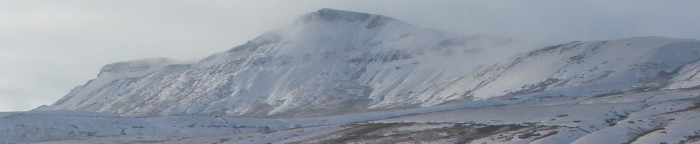
In 1963, as a 25th wedding anniversary present, my grandfather, Harry Charlton, bought West Mallerstang Common for my grandmother, Flora. This covers Wild Boar Fell (hence the title of this website) and Birkett Common (itself evoking the birch tree) at the north end which the Tommy Road goes over. Local farmers have grazing rights on this Common and it is open access land for walkers.
Centuries of overgrazing has left this land denuded with poor soil and vegetation, low biodiversity and a high water runoff rate, potentially contributing to some of the floods downstream (an example of the Tragedy of the Commons). The various bodies wanted to address this through the creation of enclosures on the East side of the valley and on Birkett Common for tree planting and the regeneration of habitat and approached the owner of East Mallerstang Common, me and the farmers who grazed the Common to see if we would agree to take part. I was thrilled to have the opportunity to plant my own trees and work with the Woodland Trust in doing so. Massive thanks to all involved, but especially Pete Leeson of the Woodland Trust, who helped me immensely in the whole project, resulting in nearly 20 hectares of trees planted as recorded in the film linked below.
You can find our more about the Woodland Trust and its work here – http://www.woodlandtrust.org.uk/
 WildBoarFell.com